Agricultural robots will spend less time making polished demos and more time working around soil, weather, plants, and people. The useful question is not when farms will become fully automated; it is which jobs a robot can do well enough to earn its place.
- Robots will start with repeatable jobs such as crop checks, targeted spraying, and weed removal.
- Cameras, GPS, LiDAR, and grippers will need to work together in changing outdoor conditions.
- A farm will judge each machine by hours worked, crop damage, repair time, and total cost.
The first jobs will be narrow
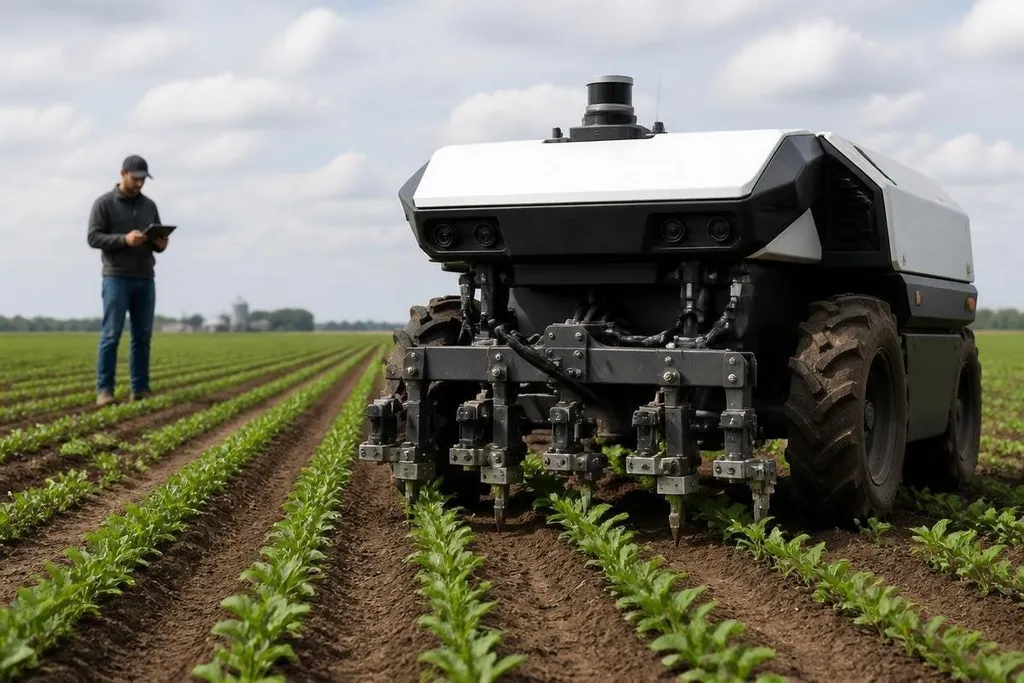
Farm work contains many tasks, but robots work best when the task has a clear result. A field robot can follow a planned route, record images, spot plant rows, or remove a weed with a small tool. Each job gives the maker a way to measure success.
That narrow focus matters because outdoor fields change from one pass to the next. Mud can cover a wheel. Leaves can hide fruit. Bright sun can alter a camera image. A robot that works in a test plot still has to handle those changes without a person guiding every move.
Fruit picking shows the harder case. The robot must find ripe fruit, reach it without touching nearby fruit, apply the right force, and place it in a container. A mistake can damage the crop, slow a worker, or send good produce to waste.
Sensors will decide what works
A farm robot needs more than a route on a map. Global navigation satellite system data can give the robot its position, while cameras help it identify plants and soil. LiDAR measures distance with laser pulses, which can help the robot detect rows, trees, and obstacles.
These sensors answer different questions. Position data says where the robot is in the field. A camera can show what stands in front of it. LiDAR can measure the shape and distance of an object. The control system must combine those inputs before it moves a wheel, arm, or sprayer.
The field test matters more than the sensor list. A report from Robot24 can place a named farm robot, test date, task, and weather conditions beside its claims. That gives you a way to judge whether the system can handle farm work after the lab demo ends.
The open issue is reliability. A farm may accept a robot that stops safely when a sensor is blocked. It will struggle with one that needs a technician after every muddy run. Makers will need to publish working hours, missed tasks, crop damage, weather limits, and repair records.
The business case comes first
A machine can perform a task and still make poor farm equipment. The farm must pay for the robot, software, batteries, tools, storage, repairs, and a person who checks its work. That cost has to fit the crop and the season.
Timing also matters. A weeding robot that arrives after weeds have spread may save less money than a slower machine that reaches the field at the right time. A picking robot faces a short harvest window, so downtime can matter more than its top speed.
Farmers will compare the robot with the current method, not with a video from a trade show. The comparison may be workers, tractors, contractors, or leaving a task undone. Each choice has a cost, and the robot has to show where it changes that cost.
What stays unproven
The field is harder than the demo area. A machine may identify a plant in clear light and lose that ability under dust, shade, rain, or tangled growth. Remote control can help during early trials, but a farm still has to pay for the person doing that work.
Fully general farm robots also remain a difficult target. Crops differ in height, spacing, shape, and value. Soil changes after rain. A tool that works on one crop may damage another.
Progress will likely come through machines built around one crop or one task, then expanded after field records support the change.
I'd wait for published field results before treating a broad farm robot claim as a buying reason.
A buying check for farm operators
Before you approve a trial, ask for:
- Named crop and task: Check the exact crop, tool, and job the robot can run.
- Field records: Ask for working hours, missed tasks, crop damage, and stops.
- Human workload: Find out who loads, watches, cleans, and repairs the machine.
- Weather limits: Record the soil, rain, dust, light, and slope conditions it can handle.
- Full cost: Add the robot, tools, software, power, service, and storage.
- Exit plan: Set the result that ends the trial or supports a larger order.
The next useful proof will come from ordinary fields, across a full work season, with costs recorded beside crop results. Until those records are public, agricultural robots are promising tools for narrow jobs, not replacements for a farm crew.